Showing posts with label offshore drilling. Show all posts

Wednesday, September 14, 2011

Ten Years After 9/11, Ground Zero Shows America’s Weakness

Do we really think if the attacks had hit China, they wouldn't have erected bigger and better buildings by now?

“We Remember.” “Never Forget.”
These phrases have been bantered about endlessly in the weeks leading up to the tenth anniversary of the 9/11 attacks.
If only they held the true meaning that so many ascribe to them.
But to quote a line recently overheard: There’s what people want to hear; there’s what people want to believe; there’s everything else; then there’s the truth.
It’s time to cut through the emotion and get to the heart of where America really stands a decade later. Be warned: it’s not a pretty picture.  And through it all, no leader has appeared who can steer the nation back on track and take the bull by the horns to avoid another major attack --- and, God forbid, if there is one, lead the nation through it.
*****
The Economy
After spending hundreds of billions on homeland security, and over a trillion more on two wars, is America in a stronger position than it was in 2001? Not even close.  In fact, despite the blood and treasure expended, this nation is in perhaps its most precarious state ever.
Manufacturing jobs have been hemorrhaging at an unprecedented rate, the economy is in shambles with absolutely no recovery in sight, the real rate of inflation is significantly higher than the government admits, and the incomprehensibly large debt has America on the brink of insolvency.  
And most of this can be attributed to one thing: the lack of an energy policy.  Or, more accurately, the abject refusal to institute an energy policy that utilizes America’s vast resources.
The result is complete reliance on foreign oil, especially from hostile Middle Eastern oil nations whose regard for America’s interests resides somewhere between zero and nonexistent. 
Mammoth spikes in gasoline, diesel and jet fuel prices continue to drive up costs, which puts companies out of business, citizens on the unemployment rolls, and keeps bank foreclosure executives very, very busy.
Perhaps most tragic of all, American’s immutable sense of pride and nationalism has taken a hit. 
Once, we possessed a “can-do” pioneering spirit that pervaded all aspects of American life, where “impossible” was not in the American lexicon.  That resolve is what vanquished the Axis Powers in World War II.  It’s what opened up the western United States, ultimately making California alone one of the largest economies in the world.  It’s how we put a man on the moon a mere 66 years after the Wright brothers’ famous 120-foot, 12-second flight. And yes, it’s how, under the leadership of Ronald Wilson Reagan, America won the Cold War --- and provided freedom for millions.
Failure to achieve success was the exception.  Now it’s become the norm.
The best example of our malaise of mediocrity? Ground Zero.
The most startling aspect of that hallowed ground isn’t that the Twin Towers, once the sentinels of American free enterprise, are gone, but that NOTHING stands there. Sure, there are reflecting pools and trees, and a shell of a building.  But that’s it.
It’s been ten years!
How is that possible? How can a decade have passed with no real progress? How could we have let the enemy win that important part of the battle?
As a comparison, if the Empire State Building had been attacked during World War II, it would have been rebuilt immediately.  No questions asked, and no moral victories for the enemy.
And to those who naysayers who would argue “it’s a different time,” think again. If the September 11 attacks had felled China’s buildings instead of ours, you can bet the ranch that they would have been resurrected --- bigger, better, and bolder --- in less than a year. Guaranteed.
Why? Because the Chinese took a chapter out of America’s playbook, and are mastering it to perfection. You know --- the same playbook that we seem to have relegated to the dustbin.
Are We Safer?
Given the hundreds of billions allocated for our security, are we really safer?
Despite some advances in communications, intelligence and specific security measures, the ultimate answer is no, for there are two gaping holes in our defenses: the borders are wide open and we refuse to profile.  Both are easily rectifiable, but because political correctness wins the day, Americans are living with a false sense of security.
Borders: What good does securing airports do if al Queda can simply walk across the border from Mexico --- with a suitcase nuclear weapon? Incompetent as that organization has proven to be, especially now that bin Laden is dead, they’re not dumb.  If they haven’t already smuggled weapons and terrorist cell members into America via our porous borders (fat chance of that, as intelligence experts concede cells are in place), they soon will.
Despite ample funds to build a wall --- a clear deterrent to both illegal invaders and terrorists --- neither Party chooses to do so for purely political reasons.  So much for real Homeland Security.
Profiling: Grandmothers continue to receive prisoner-like exams at our nation’s airports, while olive-complexioned individuals from the Middle East stroll by, unquestioned, with smirks on their faces.  Why the free pass? Precisely because they look like Arabs.

America's lawmakers have caved in to a small element that shouts "racist" anytime profiling is employed, especially in, God forbid, airports. Such practice, they claim, singles out individuals just because they appear "Muslim" or "Arab" and, as a result, these flyers feel offended. 
Get over it.
Profiling is simply a tool for law enforcement to determine who and what may be a threat, based on an ever-increasing array of data. Certain packages may be the hallmark container for a bomb - and they should be checked. A specific type of shoe may be the favored choice of shoe-bombers – so that footwear, and the owner, should be closely examined.
And yes, certain Arab and/or Muslim individuals, based on historical events, and along with appearance characteristics, mannerisms, suspect financial transactions and other patterns of behavior, should be singled out for closer inspection.

There is absolutely nothing wrong with profiling in security sensitive areas. Yes, it's a form of discrimination. So what? All nineteen highjackers on September 11 were Muslim Arabs. And so was the twentieth, Zacharias Moussaoui. The 1993 World Trade Center bombings were also carried out by people of this ethnic group.  As was the trans-Atlantic shoe bomber, the bombers of the U.S.S. Cole, the Madrid train bombers, and the London subway attackers.
What are we missing? Why are we so scared to profile? What will it take for America to demand policies that actually protect, not appease?

Sadly, probably only another terrorist attack.

This is because our elected leaders are, for the most part, too scared to tackle the issue, even though the majority of Americans support such measures. They are counseled to stay away from "hot-button" topics, instead focusing on 30-second soundbites on irrelevant issues.

To be clear, I am not advocating that random people on the street be detained and interrogated, with no probable cause, just because they "look Arab." This kind of harassment is contrary to the freedoms our country provides.
But it's time we stop worrying about people's feelings and reintroduce some common sense into our security measures.
One thing is for sure: al Queda will not stop. And if we continue to give them openings, they will gladly take them. While it’s not possible to guarantee another attack won’t occur, it will be unconscionable if it does --- and if it was preventable.
If we truly want to honor the memory of the 3,000 soul who perished on 9/11, we need to jettison political correctness, enter the real world, and combat threats in a meaningful way.
God help us if we don’t.

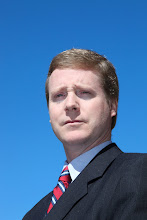
 An accredited member of the media, Chris Friend is an independent columnist, television commentator, and investigative reporter who operates his own news bureau, www.FreindlyFireZone.com

Readers of his column, “Freindly Fire,” hail from six continents, thirty countries
and all fifty states. His work has been referenced in numerous publications including
The Wall Street Journal, National Review Online, foreign newspapers, and in Dick
Morris' recent bestseller "Catastrophe."

Freind, whose column appears regularly in Philadelphia Magazine and nationally in
Newsmax, also serves as a frequent guest commentator on talk radio and state/national
television, most notably on FOX Philadelphia.  He can be reached at CF@FreindlyFireZone.com


Tuesday, April 12, 2011

$5 Gas? We Are The United States Of Arabia

“Drill, baby, drill!”
That political phrase is fast approaching “Read My Lips, No New Taxes” territory, but its message is infinitely more important. The need to become energy independent is an absolute, since America’s increasing reliance on foreign oil threatens its national and economic security like never before.
With fuel prices skyrocketing, millions of jobs are threatened, and petro dollars flow from the United States to countries which wouldn’t shed a tear over another 9/11.
Because no new oil refineries or nuclear power plants have been constructed in over three decades, one leader in particular has been attempting to reduce America’s insatiable appetite for imported oil. Last year, he opened up over 500,000 square miles of coastal waters to oil and gas exploration for the first time in over twenty years, including the Atlantic Coast, the eastern Gulf of Mexico and northern Alaska.
He summed up why: “The bottom line is this: given our energy needs, in order to sustain economic growth, produce jobs, and keep our businesses competitive, we're going to need to harness traditional sources of fuel even as we ramp up production of new sources of renewable, homegrown energy.”
In addition, this politician said, “I will tap our natural-gas reserves, invest in clean coal technology and find ways to safely harness nuclear power."
It’s no surprise that this call for drilling was a “bitter disappointment for environmentalists and Democrats,” as one press report noted. 
The surprise, however, is that this leader happens to be the head of the Democratic Party - --none other than President Barack Obama.
Obama’s actions --- pushing nuclear power in particular, as he arranged loan guarantees for two new plants --- are akin to a conservative Republican calling for a ban on handguns.  The Democratic Party has long been captive to the radical environmentalist wing, who view Obama’s push for oil and nuclear as nothing short of treasonous.
One would think that if these folks are labeling Obama’s efforts a “betrayal,” the GOP would be embracing the President on what has traditionally been part of the Republican platform.
One would be wrong.
From the 2008 campaign to the 2010 State Of The Union address, where energy independence was a major theme, the standard Republican responses have been, “Well, he really doesn’t believe that,” and “his plan doesn’t go far enough.”
Far enough?  From what?  The standard GOP policy of America bent over a Middle Eastern barrel?
Even the Tea Parties are not immune.  The President recently toured a wind turbine manufacturing plant in Bucks County, using the occasion to further tout his energy policy.  One of that region’s largest Tea Party organizations staged a rally, billing their event as a protest to Obama “discouraging domestic oil production” by “ignoring the necessity to drill for oil in our vast national reserves.”
Hey, never let facts get in the way of the truth.
The intransigence of the Republicans to run with what should be their core issue is simply incomprehensible. And while energy independence should never be a partisan issue, given that it affects our future more than anything else, it is clearly obtainable only if the GOP/Obama version is executed.
Alternative energy sources are most certainly important, but will never produce anything remotely close to the nation’s energy needs.  The indisputable fact is that black gold, natural gas and nuclear will always be the mainstay, at least until a new source is discovered.
But what has the GOP done, both when it had majorities and after it lost them?  Nothing positive.
George W. Bush could have opened up the ANWR in Alaska with virtually no opposition had he called for such in the aftermath of the 9/11 attacks.  Instead, it took him seven years to call for lifting the offshore drilling moratorium put in place by… the first President Bush.  Too little, too late.
During a radio interview I conducted in March 2010, a Pennsylvania Republican congressman actually said he couldn’t introduce an offshore drilling bill because he was “in the minority.” Sorry, but Civics 101 says otherwise.  Any bill can be introduced; the issue is whether it would make it out of Committee.  The political leverage would come from pitting the obstructionist Democratic Congress against its own President.  But that never happened.
And then-Minority Leader John Boehner’s response to Obama’s plan? Nothing but rebuke rooted in pure partisanship. “It's long past time for this Administration to stop delaying American energy production off all our shores and start listening to the American people who want an “all of the above” strategy to produce more American energy,” he has said.  But Boehner’s rubber never met the road.  Not when the GOP controlled the Congress and White House.  Not when they were in the Minority.  And not now.
Where were the Tea Party folks and Obama-bashers when the Republicans did nothing to achieve energy independence, despite holding all the cards?   They had better be careful, because selective memory and deliberate inconsistencies are the hallmarks for losing all credibility with The Great American Middle.
Is the President’s plan perfect? Of course not.  The rigs in the Gulf still sit idle, moratoriums still exist, and drilling in the ANWR isn’t on the President’s agenda.  It’s inexplicable and inexcusable that his willingness to explore options for energy independence has been met with a Republican brick wall. 
Whether it’s pure partisanship, a GOP tactic to win the Senate and White House next year, or simply the insular nature of Congress, the inability to make energy the number one issue is catastrophic. The huge growth platform that energy independence creates is the ONLY way for America to solve its budgetary woes.
Yet nothing happens.
The current inaction pushes the nation further into the red, endangering Americans’ welfare in an unprecedented fashion.
The ugly reality is that the USA may soon stand for United States Of Arabia.
Doesn’t have quite the same ring, does it?

Chris Freind is an independent columnist, television commentator, and investigative reporter who operates his own news bureau, www.FreindlyFireZone.com
Readers of his column, “Freindly Fire,” hail from six continents, thirty countries and all fifty states. His work has been referenced in numerous publications including The Wall Street Journal, National Review Online, foreign newspapers, and in Dick recent bestseller "Catastrophe."
Freind, whose column appears regularly in Philadelphia Magazine and nationally in Newsmax, also serves as a frequent guest commentator on talk radio and state/national television, most notably on FOX Philadelphia.  He can be reached at CF@FreindlyFireZone.com

Tuesday, March 22, 2011

Libya Is All About Oil --- Time To Drill

Recently on Good Morning America, Congresswoman and presidential contender Michele Bachmann was asked, “What is America’s number one vital interest in the Middle East.”
She answered, “…our safety and security of people in the United States is always number one.”
Not only was Bachmann’s response a non-descript talking-point, but it didn’t even answer the question.  Unfortunately, Bachmann missed a softball that she could have, and should have, knocked out of the park, one that would have separated herself from her colleagues.
Here’s the correct answer:
America’s vital interest in the Middle East can be summed up in three words: oil, oil and oil.  That’s it.  If that region wasn’t sitting on such huge reserves, America wouldn’t give it a second thought, with the exception of its security guarantee to Israel.
As a Republican and Tea Party leader, Bachmann should have instinctively talked of America’s unholy reliance on foreign oil, much of it from hostile nations in the Middle East, and aggressively pushed for energy-independence. 
She could have talked about how the largest natural gas deposits in the world remain virtually untapped (the Marcellus and Utica Shale); the vast oil reserves in Alaska that are closed to drilling; the Bakken Formation in North Dakota that holds over 4 billion barrels; the petroleum reserves under the Rockies that could well be the largest on the planet; the fact that we’re not drilling offshore , and that production has not yet resumed in the Gulf.
She could have then explained that, if we focused on these domestic sources, we wouldn’t be paying $4/gallon and watching inflation rise, nor would we be fretting about the Middle Eastern uprisings, and who we should be supporting. 
But she didn’t.  And that’s too bad, because otherwise, Bachmann’s voice on the national stage is an important one.
The fact is that if a leader doesn’t understand, or can’t articulate, solutions to the single-biggest problem facing America --- being bent over a barrel because of our energy dependence --- then their effectiveness is extremely limited.
And because neither Party, nor current and past Administrations, has done anything to achieve energy independence, America is now involved in yet another Middle Eastern conflict with no clear objectives.  The only things being accomplished are creating more uncertainty in world markets and placing American military personnel in danger. And for what?
Several points to consider:
1)      There is no question why the U.S. is involved.  It’s not about stopping a brutal dictator, nor is it about civilian deaths.  And it’s not about democracy and freedom for the Libyans.  It’s simply because Libya produces a lot of oil.  If it was really about any of the aforementioned reasons, we’d be forcefully engaged in most countries around the globe, since democracies are the exception.  Just look at the Rwandan conflict: 20 percent of the population was slaughtered, but it had no oil.  Result: no intervention.  A little truth for why we are in Libya would go a long way.
2)      So much for Obama’s campaign pledges of “no more wars of choice,” and “no blood for oil.”
3)      Gaddafi, while certainly no angel, has not been the thorn in America’s side he once was.  He admitted complicity in the Pan Am 103 bombing and paid reparations, dismantled his nuclear weapons program and, understanding the new world order after the 9/11 attacks, stopped harboring terrorists.  As a result, Libya was taken off the U.S. government’s State Sponsor of Terrorism list by the Bush Administration, with then- Secretary of State Condoleezza Rice stating Libya was being rewarded for its "renunciation of terrorism and the excellent cooperation Libya has provided to the United States" in the war on terror. And the flow of Libyan oil has been unimpeded. So much for the brutal dictator theory.
4)      Who exactly are the rebels we are supporting by bombing the country and establishing the No Fly Zone?  Are they all James Madison-types looking to establish a democratic Republic? Or are they the Muslim Brotherhood--- or worse?  Given many Middle Easterners’ track record of viewing the United States as the Great Satan, the odds probably aren’t favorable that we’ll be singing Kumbaya with them a few months from now. And reports now state that eastern Libya (home of the rebels) sent more fighters to engage the U.S. in Iraq than anywhere else.
5)      A No-Fly Zone does not make a democracy.  Okay, we are preventing Gaddafi from using his aircraft.  But what happens when he starts whipping the rebels anyway?  Do we bomb his troops and tanks?  Do we send in Special Forces?  What happens when a pilot is shot down--- as just happened?  More important, what happens when a similar situation arises in Saudi Arabia, and civilians get mowed down --- as they will, since the King isn’t going quietly.  Do we establish a No Fly Zone over The Kingdom?  Do we bomb them, too?  Not a chance in the world.
Despite all the questions, there are no answers, and the coalition, if you can call it that, has already begun splitting apart.
6)      We lose no matter how you slice it.  The majority of Libyan oil is sold to Italy and France, yet America has been roped in to do their heavy lifting.  Why?  And as more Libyans die from allied airstrikes, America will get blamed on the Arab Street.  Gaddafi’s claim of another “Crusade ” against a Muslim nation will hit home to millions of Muslims across the world, vastly undermining any goodwill that may have been generated over the last several years and bolstering terrorist recruitment.  And the support of the worthless Arab League, whose officials are already back-tracking, means nothing.  It’s not their planes doing the bombing, but ours.  We get all the negatives and none of the positives while the Arab League gets the best of both worlds.
The United States’ involvement in Libya, a nation that in no manner attacked America or caused it harm, sets an extremely dangerous precedent. Ironically, this effort, executed with no foresight and one that has absolutely no endgame, further endangers our national security.   Playing into the mentality of millions of Muslims that the U.S. seeks to dominate their countries will only enflame anti-American feelings.
George Washington could not have been more right when he advised against foreign entanglements and intervening in the internal affairs of sovereign nations. That wisdom is proof that modern advances will never be a substitute for old-fashioned common sense.

Chris Freind is an independent columnist, television commentator, and investigative
reporter who operates his own news bureau, http://www.freindlyfirezone.com/

Readers of his column, “Freindly Fire,” hail from six continents, thirty countries
and all fifty states. His work has been referenced in numerous publications including
The Wall Street Journal, National Review Online, foreign newspapers, and in Dick
Morris' recent bestseller "Catastrophe."

Freind, whose column appears regularly in Philadelphia Magazine and nationally in
Newsmax, also serves as a frequent guest commentator on talk radio and state/national
television, most notably on FOX Philadelphia.  He can be reached at CF@FreindlyFireZone.com
Tuesday, March 15, 2011

America Needs More Nuclear Power

         We are not Japan --- Our nuclear is safer and reduces foreign oil dependence

There is a story about a wealthy man who sought the world’s safest place in which to build his home, a place free from all dangers, natural and man-made. After expending a considerable sum researching such a location, he determined that a particular island in the South Atlantic fit the criteria.

The man spared no expense in constructing the most solid, fortified and beautiful home --- one that was virtually impregnable.

But after planning for all contingencies, something happened for which he had not accounted.

The man found himself directly in the line of fire --- of the Falkland Islands War.

The point? Life is full of risks, and despite some people’s naïve belief that risks are avoidable, they are not. Instead, our focus should be on mitigating those risks in common sense ways while still living in the real world.

But we don’t.

Already, we have heard the calls to reevaluate our nuclear power program (codespeak for phasing it out of existence) because of the situation in Japan. And God forbid that we should actually forge ahead with new nuclear plants, several of which have been recently approved. That would be dangerous and foolhardy, we are now told.

So let’s get that mentality straight. We should shelve nuclear expansion --- a virtually zero emission power source that significantly reduces reliance on foreign oil from hostile nations --- because of problems half a world away? Problems that directly resulted from Japan being front-and-center on the notorious Ring of Fire --- home to 90 percent of the world’s earthquakes and 75 percent of its volcanos. And problems that, for the most part, America doesn’t have, since almost none of the country sits on that Ring.

That’s not just naïve. That’s self-inflicted stupidity.

The United States has 104 nuclear plants in operation, accounting for 20 percent of our electricity consumption. It should be double that number, but for decades, leadership has been sorely lacking in both political Parties, and the American people are extremely short-sighted on all-things energy.

So now that we’re facing $4/gallon fuel --- with experts predicting $5 by next year , which significantly inflates the prices of almost everything due to increased transportation costs --- what are our options? We have none.

Our drills in the Gulf sit idle, Alaska is pumping but a fraction of its resources, there is no drilling off our continental coasts, and natural gas companies are shutting down operations because the demand is so low.
And now, the stigma of Japanese nuclear problems, combined with political cowardice, will all but halt the expansion of our nuclear program.

We can’t have it both ways. If paying less at the pump, bolstering national security and reducing greenhouse emissions are important, then nuclear power is the only real alternative.

So instead of punting away such a proven and safe energy source, America’s leaders need to show political courage by telling the people the truth, not what they may want to hear.
And here is the truth:

1) Unequivocally, China will not allow its nuclear program to be sidetracked or slowed by the problems in Japan. They have 27 new plants under construction, including the most advanced reactors in the world. While we bury our heads in the sand and bog down any new construction with litigation, our biggest economic and military competitor will continue to challenge our status as the world’s only superpower. And because of their determination and mettle, they will surpass us in a decade.

2) Nuclear power plants are safe. As is the case with anything, risks exist, but with proper oversight and increased fail-safe measures, many of which were implemented after the September 11 attacks, those risks are well within acceptable limits. And for those who may think this author is a NIMBY --- Not In My Back Yard ---there are four nuclear plants that literally surround my region.

Outside of the Three Mile Island (TMI) incident in 1979, there has never been a major accident in the United States. And not to minimize the seriousness of TMI, not only was no one hurt or killed, but numerous independent evaluations, including a 13-year study of 32,000 people, concluded that there were no adverse effects to the surrounding population.

3) Numerous ships in the United States Navy are nuclear-powered (including all aircraft carriers and submarines), allowing them to travel non-stop at high-speed without needing to refuel for twenty five years. Not only do these vessels represent a huge cost savings and are environmentally-friendly, since they forego two decades’ worth of oil, but they are an incalculable asset to America’s national security. And in more than 5,400 “reactor years” of operation with 500 reactors, and well over 130 million miles steamed, there has never been a nuclear accident.

4) Much of the damage to Japan’s plants was due to the tsunami after the earthquake. A common sense policy might be to build American plants several miles inland from the sea and not on fault lines, especially on the more-earthquake prone West Coast. While the rest of the country is not immune to earthquakes and tidal waves, the likelihood of those events occurring on even a fraction of the scale in Japan is remote. And America’s nuclear facilities are designed to withstand the power of the largest earthquakes.

America’s nuclear energy policy cannot and must not be formulated by what happens in other parts of the world where natural disasters (Japan) or human incompetence (Chernobyl) exist.

Common sense tells us that we can increase our nuclear-power knowledge from Japan’s unfortunate series of events. Those “lessons learned,” combined with the huge technology advances that have been realized from the days of TMI, would make America’s nuclear program the envy of the world.

Incredibly, it has taken a Democratic President to push this initiative, despite the vehement objections of his Party’s biggest constituencies.

With Republicans in control of the House and poised to take over the Senate, there is absolutely no excuse for not pushing ahead on the next generation of American nuclear power plants, which would be the first constructed in three decades.

With no end to soaring fuel prices and the Asian Tiger’s appetite growing every day, Americans should embrace nuclear power for what it is: a gift of clean and limitless energy.

To ignore this reality would be too great a risk.

Chris Freind is an independent columnist, television commentator, and investigative
reporter who operates his own news bureau, www.FreindlyFireZone.com

Readers of his column, “Freindly Fire,” hail from six continents, thirty countries
and all fifty states. His work has been referenced in numerous publications including
The Wall Street Journal, National Review Online, foreign newspapers, and in Dick
Morris' recent bestseller "Catastrophe."

Freind, whose column appears regularly in Philadelphia Magazine and nationally in
Newsmax, also serves as a frequent guest commentator on talk radio and state/national
television, most notably on FOX Philadelphia. He can be reached at CF@FreindlyFireZone.com