Tuesday, March 15, 2011

America Needs More Nuclear Power

         We are not Japan --- Our nuclear is safer and reduces foreign oil dependence

There is a story about a wealthy man who sought the world’s safest place in which to build his home, a place free from all dangers, natural and man-made. After expending a considerable sum researching such a location, he determined that a particular island in the South Atlantic fit the criteria.

The man spared no expense in constructing the most solid, fortified and beautiful home --- one that was virtually impregnable.

But after planning for all contingencies, something happened for which he had not accounted.

The man found himself directly in the line of fire --- of the Falkland Islands War.

The point? Life is full of risks, and despite some people’s naïve belief that risks are avoidable, they are not. Instead, our focus should be on mitigating those risks in common sense ways while still living in the real world.

But we don’t.

Already, we have heard the calls to reevaluate our nuclear power program (codespeak for phasing it out of existence) because of the situation in Japan. And God forbid that we should actually forge ahead with new nuclear plants, several of which have been recently approved. That would be dangerous and foolhardy, we are now told.

So let’s get that mentality straight. We should shelve nuclear expansion --- a virtually zero emission power source that significantly reduces reliance on foreign oil from hostile nations --- because of problems half a world away? Problems that directly resulted from Japan being front-and-center on the notorious Ring of Fire --- home to 90 percent of the world’s earthquakes and 75 percent of its volcanos. And problems that, for the most part, America doesn’t have, since almost none of the country sits on that Ring.

That’s not just naïve. That’s self-inflicted stupidity.

The United States has 104 nuclear plants in operation, accounting for 20 percent of our electricity consumption. It should be double that number, but for decades, leadership has been sorely lacking in both political Parties, and the American people are extremely short-sighted on all-things energy.

So now that we’re facing $4/gallon fuel --- with experts predicting $5 by next year , which significantly inflates the prices of almost everything due to increased transportation costs --- what are our options? We have none.

Our drills in the Gulf sit idle, Alaska is pumping but a fraction of its resources, there is no drilling off our continental coasts, and natural gas companies are shutting down operations because the demand is so low.
And now, the stigma of Japanese nuclear problems, combined with political cowardice, will all but halt the expansion of our nuclear program.

We can’t have it both ways. If paying less at the pump, bolstering national security and reducing greenhouse emissions are important, then nuclear power is the only real alternative.

So instead of punting away such a proven and safe energy source, America’s leaders need to show political courage by telling the people the truth, not what they may want to hear.
And here is the truth:

1) Unequivocally, China will not allow its nuclear program to be sidetracked or slowed by the problems in Japan. They have 27 new plants under construction, including the most advanced reactors in the world. While we bury our heads in the sand and bog down any new construction with litigation, our biggest economic and military competitor will continue to challenge our status as the world’s only superpower. And because of their determination and mettle, they will surpass us in a decade.

2) Nuclear power plants are safe. As is the case with anything, risks exist, but with proper oversight and increased fail-safe measures, many of which were implemented after the September 11 attacks, those risks are well within acceptable limits. And for those who may think this author is a NIMBY --- Not In My Back Yard ---there are four nuclear plants that literally surround my region.

Outside of the Three Mile Island (TMI) incident in 1979, there has never been a major accident in the United States. And not to minimize the seriousness of TMI, not only was no one hurt or killed, but numerous independent evaluations, including a 13-year study of 32,000 people, concluded that there were no adverse effects to the surrounding population.

3) Numerous ships in the United States Navy are nuclear-powered (including all aircraft carriers and submarines), allowing them to travel non-stop at high-speed without needing to refuel for twenty five years. Not only do these vessels represent a huge cost savings and are environmentally-friendly, since they forego two decades’ worth of oil, but they are an incalculable asset to America’s national security. And in more than 5,400 “reactor years” of operation with 500 reactors, and well over 130 million miles steamed, there has never been a nuclear accident.

4) Much of the damage to Japan’s plants was due to the tsunami after the earthquake. A common sense policy might be to build American plants several miles inland from the sea and not on fault lines, especially on the more-earthquake prone West Coast. While the rest of the country is not immune to earthquakes and tidal waves, the likelihood of those events occurring on even a fraction of the scale in Japan is remote. And America’s nuclear facilities are designed to withstand the power of the largest earthquakes.

America’s nuclear energy policy cannot and must not be formulated by what happens in other parts of the world where natural disasters (Japan) or human incompetence (Chernobyl) exist.

Common sense tells us that we can increase our nuclear-power knowledge from Japan’s unfortunate series of events. Those “lessons learned,” combined with the huge technology advances that have been realized from the days of TMI, would make America’s nuclear program the envy of the world.

Incredibly, it has taken a Democratic President to push this initiative, despite the vehement objections of his Party’s biggest constituencies.

With Republicans in control of the House and poised to take over the Senate, there is absolutely no excuse for not pushing ahead on the next generation of American nuclear power plants, which would be the first constructed in three decades.

With no end to soaring fuel prices and the Asian Tiger’s appetite growing every day, Americans should embrace nuclear power for what it is: a gift of clean and limitless energy.

To ignore this reality would be too great a risk.

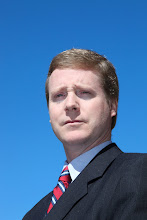
Chris Freind is an independent columnist, television commentator, and investigative
reporter who operates his own news bureau, www.FreindlyFireZone.com

Readers of his column, “Freindly Fire,” hail from six continents, thirty countries
and all fifty states. His work has been referenced in numerous publications including
The Wall Street Journal, National Review Online, foreign newspapers, and in Dick
Morris' recent bestseller "Catastrophe."

Freind, whose column appears regularly in Philadelphia Magazine and nationally in
Newsmax, also serves as a frequent guest commentator on talk radio and state/national
television, most notably on FOX Philadelphia. He can be reached at CF@FreindlyFireZone.com



Thursday, March 10, 2011

The REAL Pennsylvania Budget: Can Corbett Sell It?

Pennsylvania Governor Tom Corbett’s “day of reckoning” budget, containing substantial cuts and rolling back spending to 2008 levels, may well pass the GOP-dominated legislature without major changes. 
But just because the state constitution requires a balanced budget doesn’t mean it always happens that way.
Take the budgets of the last two years, which former Governor Ed Rendell championed, and were passed by a Democratic House and Republican Senate.
In 2009, $400 million in revenue was budgeted from the tolling of Interstate 80.  Except that the tolling never happened.  Put that in the debit column.
And last year, the budget was passed on federal Medicaid dollars that hadn’t yet been appropriated (and ended up being $255 million less than budgeted) and a Rendell-promised Marcellus Shale gas tax that would generate hundreds of millions --- but which never materialized.
And the forecasted general tax revenue was over a billion dollars short. 
But that’s not all.  The legislature and Rendell raided MCARE in 2009 --- the fund to offset Pennsylvania doctors’ skyrocketing medical malpractice insurance rates --- to the tune of $800 million.  A Commonwealth Court ordered the money repaid, but the Rendell Administration appealed.  Odds are the state Supreme Court will uphold that decision.  The hole deepens.
So despite some cuts last fall, we’re still looking at a $3 billion revenue gap which, by the way, is not factored into the acknowledged $4 billion deficit.   The fact that no one wants to talk about this is not surprising, since it’s not in the interest of the politicians, and most of the media doesn’t do its homework.
Let’s put this type of maneuvering into perspective.  What would happen if a publicly-traded pharmaceutical company, in an attempt to placate Wall Street, added billions to its books to reflect a medicine it hadn’t yet produced? 
People would go to jail.
But in Harrisburg, it’s called Business As Usual. Instead of solving the real problem, the state’s leaders have resorted to what they do best: bury their heads in the sand.
Just because you pretend a problem doesn’t exist, though, doesn’t mean it’s not there.  The can is being kicked, yet again, down the road.  But the road is quickly coming to an end.
*****
Overall, the budget rates a B-, assuming that you believe the numbers --- and that’s a big assumption.
There is nothing particularly special about this budget, since spending cuts were imminent after the federal stimulus money dried up.  It gets the job done at a basic level, and Pennsylvania will continue to limp along. 
While there were clearly some elements in the Governor’s address that could help Pennsylvania re-invent itself into an economic and industrial powerhouse, the speech lacked the break-out vision that is essential in selling those ideas to the public.  No one expects Corbett to have the jazz of New Jersey Governor Chris Christie, but Pennsylvanians need to be inspired if their state is to forge ahead.
A prime example would have been explaining why the Marcellus Shale holds such so much promise for Pennsylvania’s future, from the thousands of sustainable jobs it creates (and the accompanying houses bought and income spent in-state), to untold millions in tax revenue, to the manufacturing boom it can foster by providing extremely cheap energy.  
Corbett could have showcased manufacturing companies that drill wells on-site and, as a result, now realize incredible cost savings for what is always the largest line item: energy.  This directly translates into business expansion, more hiring, and a way to finally compete with China.
Or he could have decreed that from this moment, all future state vehicles will run on natural gas, currently about one-seventh the cost of gasoline, with zero emissions. This would be a win-win by increasing demand for natural gas --- and if that doesn’t happen soon, the industry will start packing up by next year --- and saving taxpayer money.  And what a boom to the entire economy if we had an alternative to $4/gallon gasoline.
But that didn’t happen.  So all the public knows is what they see in the headlines: “We’re Getting Drilled,” “How Corbett Fracked Pennsylvania’s Middle Class,” and “Big Budget Cuts?  We Smell Gas,” along with editorials about how much the industry contributed to the Governor’s campaign.
Reality is now setting in; what a Republican candidate said on the campaign trail in October 2010 --- a landslide election year for the GOP--- was easy.  Now the rubber meets road.
The question isn’t if Tom Corbett can get this budget passed, but whether can he sell it to the people, and at what cost to his agenda and Party, particularly since 2012 will prove a better year for the Democrats. His deliberate strategy to remain silent for four months has resulted in lost opportunities to earn much-needed political capital needed to sell his budget cuts to the public.
To reverse that, he must now barnstorm across the state, a la Christie, attending everything from natural gas forums, explaining why an extraction tax will hurt the state, to school board meetings, where he can push his idea of teacher salary concessions.  Time will tell whether he will effectively be that messenger.
There were a number of common sense proposals that, based on the legislature’s make-up, should come to fruition: the reduced spending and no new taxes; legal reform targeting frivolous lawsuits (the Fair Share Act); school choice in which competition and accountability would be injected into the educational system; the phase out of the Capital Stock and Franchise Tax, the elimination of pork-barrel walking around money (WAMs); and calls for pay freezes and give-backs by public workers.
Likewise, there are a number of problem areas:
-Eliminating 1,500 jobs is a good start, but since reports state that 1,000 of them aren’t filled, the real number is only 500 jobs, which isn’t a huge budgetary factor. So why the gimmick?
-The assumption that revenue will grow by 4.7 percent, while not impossible, is hugely optimistic.  Inflated revenue has been a hallmark of past budgets to make the numbers work on paper. In reality, they came up short, adding to rolling deficits.  Without substantial growth in Pennsylvania, that rosy figure will prove unattainable.
-Calling for cuts to higher education by 50 percent, while increasing welfare spending substantially, will also be an extremely hard sell, for two reasons. First, many will frame the issue simply as education versus welfare, and which provides the better return on investment. Second, state-related schools, such as Temple, Penn State, Pitt and Lincoln, have immensely powerful lobbying operations, including parents and students, who will deluge their elected officials in opposition.  Look for that figure to drop substantially, to be made up somewhere else.
-One item that is noticeably absent from the budget is the privatization of liquor stores, which is curious since it was the one issue on which the majority of Pennsylvanians agree.  Instead, a blue-ribbon commission was formed to study privatization.  Here’s a newsflash.  Voters elect politicians to solve the problems, not authorize more meaningless commissions.  A major chip in the fight has been shelved, shifting the momentum to the unions which support the status quo.
-Other areas left out but still mandatory for a healthy business climate were the reduction of the corporate net income tax (2nd highest in nation) and the looming pension issues, which may be addressed as public sector union contracts are negotiated this spring.  The Governor has taken the elimination of collective bargaining off the table though, a concession that simply didn’t have to be made this early. They received nothing in return from that move. Another head-scratcher.
-There are also several inconsistencies that the Governor must address.  While he advocated salary freezes and reductions, he raised the salaries of all his executive staff, and the budget of the Lieutenant Governor’s office increased 30 percent. And despite de-funding the adultBasic program, which provided healthcare to working poor on the premise that there was no more money, he found a way to bail out the Philadelphia Shipyard to build ships with no buyers. 
Saying all the right things about fiscal discipline, free enterprise and removing government from where it doesn’t belong rings a bit hollow in light of some recent Corbett Administration decisions.
*****
The Governor used the analogy of reviving an apple tree to explain why the cuts are necessary, stating that if the tree isn't tended, it will grow into a tangle of limbs and bear no fruit. The pruning (hard cutting) was needed so the tree could once again bear fruit.
In keeping with the theme, here’s a piece of advice: if you're afraid of getting a rotten apple, don't go to the barrel. Get it off the tree.
The Governor is right: we need to revive the tree.  But as of now, too much of this budget is coming from the same old barrel.

Chris Freind is an independent columnist, television commentator, and investigative
reporter who operates his own news bureau, www.FreindlyFireZone.com

Readers of his column, “Freindly Fire,” hail from six continents, thirty countries
and all fifty states. His work has been referenced in numerous publications including
The Wall Street Journal, National Review Online, foreign newspapers, and in Dick
Morris' recent bestseller "Catastrophe."

Freind, whose column appears regularly in Philadelphia Magazine and nationally in
Newsmax, also serves as a frequent guest commentator on talk radio and state/national
television, most notably on FOX Philadelphia.  He can be reached at CF@FreindlyFireZone.com


School Choice Non Debate: Sen. Tony Williams A No-Show --- Again

The Great School Choice Debate, hosted by The Independence Hall Tea Party Association on March 6, was a passionate discussion of Senate Bill 1, the school choice bill currently in the state senate. At issue was whether SB 1, a limited scope bill granting a voucher to low-income families (in which the state subsidy would follow the child, not the school) is the only legislation achievable at this time, or whether a broader, more comprehensive bill can be passed.
Unfortunately, it wasn’t the healthy debate that it should have been because Senator Anthony Williams, one of the bill’s prime sponsors and a confirmed panelist, arrived well after the event had ended.  It seems he was misinformed of the time, despite everyone else getting it right. 
Although mistakes happen, it is curious that this is the second time in one month that the senator committed to a school choice discussion, and failed to show.  Some may chalk that up to bad staffing, but others who have been around politics don’t believe in such coincidence.
Regardless, the discussion was lively, civil and productive, with all the participants in agreement that school choice was crucial, the only measure that would bring competition and accountability to our failed school system. The panelists were:
-Reverend Joe Watkins, former Lt. Gov. candidate, MSNBC commentator and Executive Director of the Students First organization;
-Dom Giordano, talk-show host extraordinaire on 1210 WPHT, the region’s largest talk-radio station.  Giordano was slated to be the moderator, but sat with Watkins so the discussion wouldn’t be lopsided.
-State Representative Curt Schroder, a proponent of statewide school choice. Schroder was a House member in the mid-90’s when a comprehensive school choice bill barely missed passage;
-Yours truly, author of numerous columns and participant in several television segments advocating school choice, including why SB 1 is flawed legislation that will most likely fail if it is not amended in the House to expand choice.  I was also Executive Director of the REACH Alliance, the preeminent statewide school choice organization, during the school choice battles in the 90’s.
*****
Before the Pennsylvania dialogue began, New Jersey state senator Michael Doherty discussed his state’s efforts to pass education reform.  Doherty explained that, while more expansive tax credit programs and school choice would be ideal, they simply weren’t possible given the sizable Democratic majorities in that state’s House and Senate. He said that they had to settle for what was politically possible.
And that’s exactly why the defeatist attitude of some SB 1 proponents is so incomprehensible.  To say that a bill limited only to low-income families is the best we can hope for is simply inaccurate. 
Which is why something doesn’t pass the sniff test. 
Rational political observers have stated that, if they didn’t know better, it would seem, for some reason, there has been undue influence to kill any effort to expand the bill.
Either that, or legislators don’t want to do the work necessary to come up with better legislation.
I had the opportunity to speak with Senator Williams after the non-debate, and while I came away with some good news, I also left with a lot more skepticism.
Williams claimed that the legislation for comprehensive, statewide school choice failed in 1995 by a single vote, a point on which I wholeheartedly agree.
I then asked him if he would support a more expanded version of school choice than is currently offered in SB 1, and he stated that he would (great news), but that “it would not pass,” (a perplexing statement).
And therein lies the problem.  There is absolutely nothing on which that assumption can be made, and, in fact, the opposite is undisputedly true.
Let’s forget our biases for or against school choice, and focus just on the political realities between 1995 and now.
Despite the Republican wave of 1994, the State House remained Democratic by one vote. It took a party switch to give control to the GOP --- and the ability to push school choice in that chamber. 
In the time span since, the legislature has experienced a turnover of at least 70 percent.

Fast forward to the wave of 2010, when thirteen seats flipped and the GOP gained a ten seat majority.  And not only are there more conservative legislators, but the public is much more accepting of school choice.

As an added benefit, Williams will most likely bring several more Democratic legislators with him who were previously “No” votes.

So let’s follow this logic.  Fact: the statewide school choice bill fell one vote short in 1995, when the House had a one seat Republican majority.  Fact: the House now has a 10 vote GOP majority.  Fact:  the electorate is much more understanding of the need for this legislation.  Fact: the Republican Governor has stated his support for statewide school choice.  Fact: Williams brings additional Democratic votes.

Given these facts, the passage of comprehensive school choice legislation should be a slam dunk.

Instead, with no actual vote count having been taken, the white towel has been thrown in before the fight has begun.

The “we can only get school choice incrementally” argument is based on a number of false assumptions, such as the House and Governorship remaining in Republican hands over the next several cycles, the legislature actually agreeing to take up such a controversial issue year after year while facing the wrath of well-funded teachers unions, and that a limited program will produce noticeable improvements. And if a limited program is judged to be only a marginal improvement, the entire program could be jeopardized, nullifying the one-slice-at-a-time argument.

Here’s the bottom line: the forces standing in the way of progress by deliberately ignoring all the political signs need to stop being part of the problem. 

Pennsylvania cannot improve its economic position by graduating functional illiterates, which is exactly what we are doing.  Half of the state’s 11th graders cannot read or write proficiently.

It’s time, once and for all, to take our heads out of the sand and do the right thing for our children --- all of them. Failure to do so will simply waste another decade and forsake our future.

And what a terrible “choice” that would be.

Chris Freind is an independent columnist, television commentator, and investigative reporter who operates his own news bureau, www.FreindlyFireZone.com

Readers of his column, “Freindly Fire,” hail from six continents, thirty countries
and all fifty states. His work has been referenced in numerous publications including
The Wall Street Journal, National Review Online, foreign newspapers, and in Dick
Morris' recent bestseller "Catastrophe."

Freind, whose column appears regularly in Philadelphia Magazine and nationally in
Newsmax, also serves as a frequent guest commentator on talk radio and state/national
television, most notably on FOX Philadelphia.  He can be reached at CF@FreindlyFireZone.com


Friday, March 4, 2011

Court Was Right To Allow Westboro Funeral Protests

Frivolous lawsuits, such as those that make healthcare costs skyrocket, put manufacturers out of business, and dissolve personal responsibility, not only threaten our liberty, but often erode America’s unique foundation --- freedom of speech.

A case still garnering headlines is that of Albert Snyder, the father of a Marine killed in Iraq. Snyder brought suit against the Kansas-based Westboro Baptist Church in 2006 after some church members staged a demonstration at the funeral of his son, Matthew.
He sued because the demonstrators inflicted emotional distress on the family, invaded their privacy, attacked Matthew’s memory, and stripped him of his dignity. It was also claimed the protesters prevented family members from reaching closure.
The suit proceeded even though the protesters had followed the appropriate laws, checked in with police, and were 1,000 feet from the church.  And Mr. Snyder admitted he couldn’t see the signs, only learning of the protesters’ message upon watching the news.
Yet in 2007, a federal jury awarded Snyder $11 million in damages. A Court of Appeals later overturned that decision, ordering Snyder to pay $16,510 in legal fees to the Church’s leader, Fred Phelps.

That caused an outpouring of support for Snyder, including FOX commentator Bill O’Reilly, who last year offered to pay the legal fees. (The case was further appealed to the Supreme Court).

While a nice gesture, O’Reilly missed the point.

By supporting Snyder’s lawsuit, he and many conservatives who often talk about “freedom” and “liberty” are, ironically, contributing to the loss of both.

Should attacking someone’s memory really be a crime?

Make no mistake. Phelps’ preaching during these protests is twisted and vulgar.  Church members carry signs reading "Thank God for dead soldiers" and somehow think soldiers’ deaths are the result of God's punishment for “America's sins.”

But no matter how revolting these people are, and no matter how much salt is added to families’ wounds by hitting them at their lowest point --- since parents should never have to bury a child --- no court should entertain a lawsuit for hurt feelings.

Doing so is another step toward politically-correct “thought police.”

It also opens the door to free speech erosion, which, once ajar, never closes.

Obviously, there are exceptions.  You can’t falsely yell “fire” or impersonate a police officer. But those are common-sense restrictions based on public safety.

Insulting someone doesn’t come close to meeting that threshold.

Repugnant beliefs, whether exhibited by the Westboro protesters or the KKK, isn’t, and shouldn’t, be a crime.

O’Reilly was way off on that point, too, saying that the protesters committed a crime by disturbing the peace.

When a well-respected media member makes that kind of irresponsible statement, it has negative consequences.  Millions echoed O’Reilly’s belief, unaware that they too were incorrect.

First, if they had disturbed the peace, they should have been arrested. But they weren’t.
Second ---and here’s where Bill should have known better --- even if they had, that would have been a criminal case, not a civil one. 

Minister Phelps’ speech was clearly political.  Suing him is akin to suing a pro-lifer for showing a picture of a fetus to someone entering an abortion clinic. That person won’t be pleased, but suing the protester should never be an option.

The real issue is how such a frivolous case ever saw the light of day.  And the jury award? Eleven million dollars because a few ignorant people made you feel bad? Even for frivolous lawsuits, that takes the cake. Jackpot juries must be reined in, or the lunacy will only increase.

What’s next?

That guy who calls you an unprintable name?  Sue him!  Your boss who belittles you?  Hire an attorney! And if you’re an elected official or celebrity on the receiving end of a not-too-flattering commentary? File suit to shut down the critics!

Ironically, the freedoms that Matthew Snyder died protecting are the very ones we are nonchalantly giving away.

It’s time to wake up, America.

Europe has become a dying, cowardly continent, appeasing the very enemies that seek to destroy it by bowing to radical Muslims who want to shut down any viewpoints they deem offensive.

Is that where we are headed?  Ban this, censor that, and eliminate more freedoms?

Thankfully, the Supreme Court just ruled, 8-1, that the military protesters’ speech is not unlawful

But many in the country still vehemently disagree, advocating more bans and increased restrictions.

Fine.  That’s their right. But they should at least be honest and stop pretending they care about “liberty.”

Censor everything, and replace the Stars and Stripes with the white flag of surrender.  Ironically, we’ll have become what these people claim to abhor: the United States of France.


Chris Freind is an independent columnist, television commentator, and investigative
reporter who operates his own news bureau, www.FreindlyFireZone.com

Readers of his column, “Freindly Fire,” hail from six continents, thirty countries
and all fifty states. His work has been referenced in numerous publications including
The Wall Street Journal, National Review Online, foreign newspapers, and in Dick
Morris' recent bestseller "Catastrophe."

Freind, whose column appears regularly in Philadelphia Magazine and nationally in
Newsmax, also serves as a frequent guest commentator on talk radio and state/national
television, most notably on FOX Philadelphia.  He can be reached at CF@FreindlyFireZone.com


Wednesday, March 2, 2011

Tom Corbett's DRPA: Same Old Story?

Corbett’s DRPA: Same Old Story?
A changing of the guard occurred this week at the scandal-plagued Delaware River Port Authority (DRPA), as Governor Corbett appointed himself the new Chairman, and replaced five Board Commissioners.
The law-and-order Corbett has pledged to clean up the Authority through openness and transparency, vowing to oversee an entity free of the conflicts that plagued the prior Board.  But his appointments --- all political insiders --- have left many wondering if anything has really changed.
As Chairman, the Governor sets the DRPA agenda, and he deserves the benefit of the doubt that he will live up to his promises.  That said, a look at the new Commissioners reveals that none are known as reformers or good-government advocates, and, in fact, raises new questions, such as whether the companies of Board members will be eligible to receive DRPA contracts.
Cumulatively, the backgrounds of the six new Board Commissioners feature four lawyers (including one who works for the same firm as Montgomery County GOP Chairman Bob Kerns and State Senate Transportation Chairman John Rafferty), a real estate executive, a former union vice president, an official from the scandal-plagued Street Administration, large dollar campaign donors to Corbett, a prominent GOP fundraiser, and former officials of a number of Philadelphia’s not-so-respected entities: the Philadelphia Industrial Development Corporation, the Philadelphia Redevelopment Authority and the Seaport Museum (which played a major role in the corruption trial of convicted ex-senator Vince Fumo). 
 
The new appointees to the board:

-William Sasso, board chairman at Stradley Ronon Stevens & Young law firm in Philadelphia. Sasso is a prominent Republican fund-raiser and was a co-chair of Corbett's transition team. The Stradley firm contributed $173,000 to Corbett.  As an individual, Sasso donated $23,000 to Corbett’s attorney general and gubernatorial campaigns.
-Joanna Cruz, an attorney with Kerns, Pearlstine, Onorato & Hladik, the firm of Montgomery County GOP boss Bob Kerns and State Senate Transportation Committee Chairman John Rafferty. Kerns contributed $7,500 to Corbett.
-Joann Bell, an executive at Pugliese Associates, a lobbying and government relations firm. A former special-projects manager for the Philadelphia Industrial Development Corporation and former vice president of AFSCME District Council No. 47, she was also an economic-development coordinator in former Mayor John F. Street’s Administration. The Pugliese political action committee contributed $1,500 to Corbett.

-Walter D'Alessio, vice chairman of a real estate investment banking firm, and senior managing director of a real estate consulting group. A former chairman of the board of the Independence Seaport Museum, and former executive director of the Philadelphia Redevelopment Authority, he also served on Corbett's transition team and donated $2,500 to the Governor.
-David Simon, senior vice president and general counsel for Jefferson Health System in Philadelphia. Former general counsel to the Pennsylvania Insurance Department, he contributed $29,500 to Corbett's campaigns and served on the Governor’s transition team.
On a similar note, Corbett appointed attorney Charles Kopp to serve as Chairman of the Philadelphia Regional Port Authority.  Lawyers at Kopp’s firm, Cozen O’Connor, donated nearly $150,000 to the Governor’s campaigns.
Corbett’s consistency is being called into question.  Despite advocating fiscal discipline and adhering to the free market system, he supports the subsidized Philadelphia Shipyard bailout. Similarly, criticizing Rendell for his DRPA conflicts seems a bit hollow when the new Corbett Board has more than its share of cozy relationships with the political powerbrokers.
This is not to call into question the integrity of any new Board member, nor the Governor himself. All may turn out to be true reformers, smashing the DRPA’s Business As Usual reputation as a haven of political patronage and a piggy bank for the insiders.
But until bold action and aggressive leadership takes place, that’s an impossible sell to an extremely cynical public. Based on Corbett’s promises to right the ship, there was not just the hope but the expectation that he would appoint good-government reformers to the Port Authority. 
That didn’t happen. At all.
So what needs to be done to earn back the public’s trust? Here are four quick ways:
1)      Stop the 25 percent toll increase slated for July, and put commuters ahead of Wall Street bondholders and the DRPA itself. At Corbett’s first Board meeting this week, he said commuters should be able to use the bridges as “cheaply” as possible.  Well, stopping the back-breaking toll hike is the only way to accomplish that.  But if he waits any longer, that goal becomes almost unattainable, as there simply won’t be enough time to realize cost-savings which would offset the revenue generated by the toll increase. The clock is ticking.
2)      Fire CEO John Matheussen as well as most top executives. It’s bad enough Matheussen makes $50,000 more than either governor (and, up until investigative media reports aired, was enjoying a $17,000/year car allowance), but his reign has been one of catastrophic failure.  The DRPA debt substantially increased, economic development projects having nothing to do with the bridges continued unabated, conflicts ran rampant, and he kept the Board itself in the dark on numerous issues. He would have been fired years ago had he been in the private sector.
And while it’s technically true that he can’t be “fired” by either Corbett or Gov. Christie (a majority of Board members is necessary to do that, and the Jersey Boys have been reluctant to can their patronage king), there is no way on God’s green earth that Matheussen or the Jersey Board can withstand the pressure of two powerful governors, who each have an ace-in-the-hole.  It’s called the Bully Pulpit.  Time to use it.
3)      Slash costs across the board.  It is simply not necessary to have 900 employees with lavish salaries and benefits operating four bridges and a short rail line.
4)      Authorize a top to bottom forensic audit from a non-political firm. If no stone is left unturned, millions upon millions in savings will be realized.
Despite the Board meeting being a prime occasion to initiate such ideas, something else happened: absolutely nothing.
Corbett promised “a deep review before making any major changes” and stated his intention to get out of the economic development business. 
That’s not exactly going out on a limb, since economic development had already been stopped. And there’s no economic development money left anyway!
For Corbett to say it was too early to replace Matheussen or to make any other big changes because he needed more time to figure things out boggles the mind.  The Governor should have been up to speed already since he was Attorney General when criminal misconduct was being reported (which is why the New Jersey AG is conducting a criminal investigation).  As a gubernatorial candidate for over two years, he was well aware that the Pennsylvania governor picks the DRPA Chairman, and could not possibly have overlooked the comprehensive media coverage of the DRPA debacles.
Oh, wait.  The Governor doesn't acknowledge the validity of those reports. "I don't judge anything, no offense, by what you people put in newspapers and on TV," he said after the meeting.
Does that mean Mike Joyce of the EZ Pass scandal was framed? Were all the investigative reports devoid of documented facts?  Did the DRPA agree to reforms for any other reason than the hard-hitting media coverage?
All of which gets back to the fact that the toll-paying public will have to wait at least another month to see action.  And their patience is growing thin.
A golden opportunity to win political capital is in danger of being lost by Corbett--- mandatory if he is to successfully tackle the tough issues ahead (budget, pension reform, school choice, privatization of liquor).  The Governor doesn’t seem to understand how important reforming the DRPA has become to the Southeast, home to half the state’s population. His board appointees and the lack of bold leadership have sent the message that, as of now, nothing has changed.
And here’s the biggest irony.  In four months, when commuters and shore-bound drivers realize the toll is $5 (up from $4 now, and $3 two years ago), compounded by $5/gallon gas, whom will they blame? Here’s a hint: it won’t be Rendell, but the man in charge.
Despite changes to the DRPA over the last year, conflicts and corruption still exist.  Time will tell whether the Port Authority can earn back the public’s trust, but if a serious effort isn’t made by Governors Corbett and Christie to clean house, fire CEO Matheussen, and stop the impending 25 percent toll increase, that may just be… a bridge too far.

Chris Freind is an independent columnist, television commentator, and investigative
reporter who operates his own news bureau, www.FreindlyFireZone.com

Readers of his column, “Freindly Fire,” hail from six continents, thirty countries
and all fifty states. His work has been referenced in numerous publications including
The Wall Street Journal, National Review Online, foreign newspapers, and in Dick
Morris' recent bestseller "Catastrophe."

Freind, whose column appears regularly in Philadelphia Magazine and nationally in
Newsmax, also serves as a frequent guest commentator on talk radio and state/national
television, most notably on FOX Philadelphia.  He can be reached at CF@FreindlyFireZone.com


Tuesday, March 1, 2011

How To Pass Pennsylvania School Choice

Author’s Note:

The Archdiocese of Philadelphia just announced that it will be closing seven more schools, a trend that has been occurring for decades. Despite some disingenuous critics who label any choice program as a “bailout of the Catholic Schools,” it is no secret that non-public schools would significantly benefit from comprehensive school choice legislation. And the more non-public schools there are, the more competition there is.

These school closings --- four of which are in Philadelphia ---reinforce Freindly Fire’s earlier-stated position that Senate Bill 1’s effectiveness will be extremely limited, not just because it caters only to low income families, but for the simple reason that fewer and fewer schools remain as alternatives to the current monopolistic system.

And to repudiate yet another fallacious argument that school choice costs taxpayer money (when in fact it would save it), consider the following:

The seven schools had a cumulative projected enrollment of 857 students next year.  Based on dwindling number of non-public schools, assume that half will attend public schools.  At an average cost of $15,000 per student, per year to educate one student in the public schools, these 428 students will cost taxpayers an additional $6,427,500 per year.  If each student has, on average, six years of grade school remaining, the cost rises to over $38 million. 

And of course, that figure does not reflect inflation, nor the huge costs of hiring more teachers, funding additional pensions, building more classrooms, buying more textbooks, and increasing busing. 

Pennsylvania can’t afford NOT to enact school choice.


The school choice bill in the Pennsylvania Senate is significantly flawed legislation which should never have been introduced.  Rather than craft a new bill to reflect the positions of the current legislature and Governor --- both far more receptive to comprehensive school choice than their predecessors --- the prime sponsors didn’t do their homework and jumped the gun by dusting off outdated legislation.  As a direct result, Senate Bill 1 (SB 1) is effectively dead-on-arrival.
Since SB 1 was introduced a mere week after the new legislature was sworn in, no preliminary vote count was conducted during those seven days.  Therefore, statements that SB 1 is “the best we can hope for at this time” and “school choice can be expanded incrementally in the coming years” are fallacies based on the musings of out-of-touch ivory-tower proponents naively setting the bar artificially low.  Incomprehensibly, they are throwing in the towel before the fight has even begun.
Here are the facts why statewide school choice is needed, and suggestions on how to accomplish that goal:
1)      Pennsylvania students are 42nd in SAT scores, and rank low in literacy, graduation rates and those going to college.  Their performance on the National Assessment of Education Progress exam has not improved.  And most startling, nearly HALF of all 11th graders are not proficient in math and reading.  This cannot be attributed to just the poor-performing urban schools pulling down scores, but is testament to an across-the-board educational failure. 
Advocating school choice for only low-income students results in the default perception that education is adequate everywhere else, which, based on the results of PSSA standardized test scores, is not remotely accurate. We cannot afford to waste another decade, forsaking our children --- our future --- because some choose to ignore the widespread failure occurring on a daily basis.
2)      Pennsylvania spends $26 billion per year on education --- more per student than 39 other states --- an amount which has doubled since 1996.  Despite a drop of 27,000 students over the last ten years, the public school system had added 33,000 employees in that time. Therefore, by definition, increased funding, more personnel and decreased class size has not improved student achievement.
3)      Teachers’ salaries and benefits rank among the highest in the nation, yet Pennsylvania leads the nation every year in school strikes --- more than all other states combined. 
4)      The components in SB 1were derived during a prior legislative session with a Democratic House and an anti-school choice governor (Rendell).   But the current legislature has thirteen more House Republicans than last session, giving the GOP a ten-seat majority.  While education should never be partisan, it is no secret that Republicans are much more favorable to choice than Democrats.  And Governor Corbett made school choice a cornerstone of his campaign. Combined with the pro-school choice positions of several Democrats, including Senator Anthony Williams, passage of comprehensive choice is eminently obtainable.  (And if Williams and his colleagues won’t support statewide school choice, but only a program only for low-income families, their motivations will be questioned and their credibility severely undermined).
5)      With a legislature approximately 80 percent different (and one clearly less open to choice), no votes from the Black Caucus, and only a one-seat House Republican majority, the statewide school choice effort in 1995 failed by a mere three votes. Given the night-and-day differences between then and now, it is indisputable that political will from Governor Corbett and legislative leaders could, should and would result in the nation’s most comprehensive and inclusive school choice program, one which will save taxpayer money.
6)      The argument that school choice will take money away from the public schools is not just wrong, but irrelevant.  The only thing we should EVER be concerned with is the children. Schools don’t get jobs and lead nations; people do.  The funding should follow the child, not the system --- a brilliant aspect of SB 1, where parents designate the school to which the state subsidy will be applied.
Following are the steps necessary to ensure that meaningful school choice is passed in Pennsylvania:
A)    SB 1 must be re-written and introduced as a new bill, or a separate bill needs to be introduced in the House.  Grassroots organizations cannot support flawed legislation with the hope or “promise” that it will be amended at a future date.
B)    The bill must make school choice available to all students, regardless of family income.  This type of comprehensive program is the only way to bring accountability and competition to all schools, public and non-public alike. Our dire situation demands no less.
C)    The provision for public schools to “opt out,” as is permitted in SB 1, must be stricken.  Opting out will result in the public school establishment’s “Good Old Boys” network to kick in, guaranteeing that the vast majority of schools won’t participate.  If that occurs, school choice is meaningless.
D)    The bill should contain strengthened language that no additional regulations may be imposed on non-public schools.  Current government requirements are adequate and unobtrusive, such as core curriculum and length of school year.  Vouchers or subsidies do not lead to additional regulation, as the highly successful post World War II GI Bill attests, but eternal vigilance is the price of liberty, so such language will alleviate this issue.
E)     While government should not impose tuition mandates on non-public schools, the possibility of inflated tuition costs at these schools is an area of concern. Language can be written that limits the subsidy (which cannot exceed tuition cost) to a maximum two percent increase per year, based on the tuition charged in the first year that school choice is enacted. This common sense solution would keep tuition inflation in check while keeping government out of private school decision-making.
F)     Expanding the Educational Improvement Tax Credit is a positive step, as the program has seen positive results.  But to be clear, the EITC is not school choice since parents do not control their tax dollars; the scholarships, which average $1000, are doled out by organizations and schools.  Parental control is significantly limited, unlike a true statewide school choice program.
Like any controversial issue, the school choice debate lends itself to misinformation, half-truths and personal attacks.  Pennsylvanians should not be hypnotized by the complexities of education reform, but rather focus on what is indisputable: our government-run public school system is a monopoly with no incentive to change, and only competition can begin to reverse decades of educational failure.
Comprehensive school choice provides that free-market solution, and, when passed, will be a model for the nation.  Failure to do so will destroy another generation’s chances for success.

Chris Freind is an independent columnist, television commentator, and investigative
reporter who operates his own news bureau, www.FreindlyFireZone.com

Readers of his column, “Freindly Fire,” hail from six continents, thirty countries
and all fifty states. His work has been referenced in numerous publications including
The Wall Street Journal, National Review Online, foreign newspapers, and in Dick
Morris' recent bestseller "Catastrophe."

Freind, whose column appears regularly in Philadelphia Magazine and nationally in
Newsmax, also serves as a frequent guest commentator on talk radio and state/national
television, most notably on FOX Philadelphia.  He can be reached at CF@FreindlyFireZone.com